To stay updated with current developments, news, and events, join our mailing list below:
Vision
Sauson Solutions lives by transparency, morality, honesty, and integrity.
The Founders

Faith Atkinson is an environmental engineer with a background in hydrology, environmental modeling, and water resource management. She earned her Bachelor of Science in Environmental Engineering from West Texas A&M University, where she served as President of the American Academy of Environmental Engineers and Scientists and was actively involved in Engineers Without Borders. In addition to her technical expertise, Faith has led projects addressing water contamination and ecological rehabilitation, making significant contributions to the fields of water management and climate change adaptation.


Kimberly Sauceda is an environmental scientist and engineer with extensive experience in atmospheric and aerosol research, as well as environmental remediation. She holds a Bachelor of Science in Environmental Engineering from West Texas A&M University and completed a Master of Science in Environmental Science at Baylor University. Kimberly has worked with various research laboratories, including the Atmospheric and Aerosol Measurement Laboratory and the Sheesley Laboratory, where she analyzed aerosol samples, conducted ice nucleation studies, and measured VOC’s influence on atmospheric chemistry.

Experience
Reinventing the Nation’s Water Urban Infrastructure Campaign Research Experience for Undergraduates
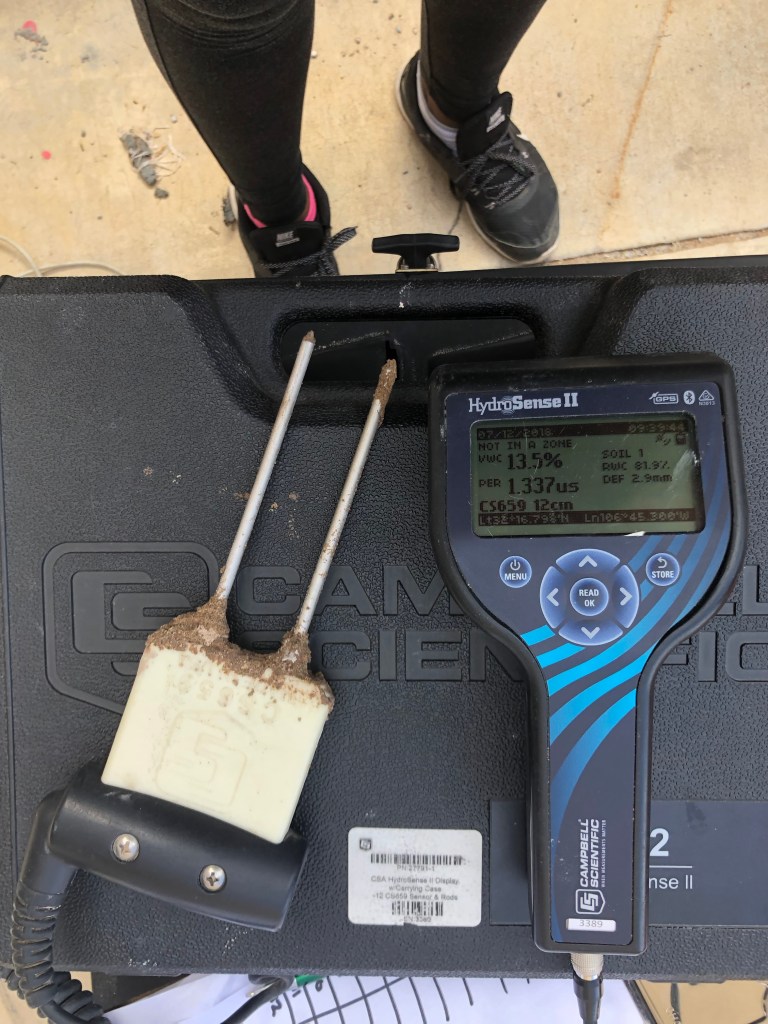
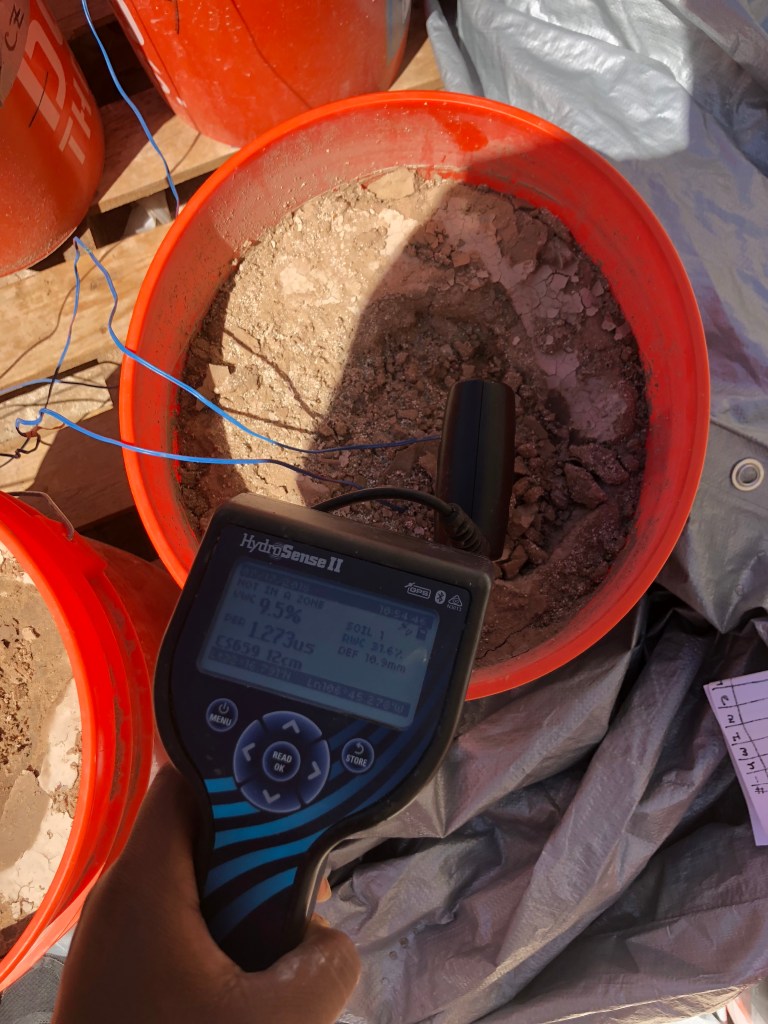
During the summer of 2018, Faith managed the ecological rehabilitation of a riparian zone using an engineered natural systems approach. She tested clinoptilolite zeolite water retention properties through multiple column studies to aid in water availability within the Rio Grande region of Texas and New Mexico.
Konza Prairie Biological Tallgrass Prairie
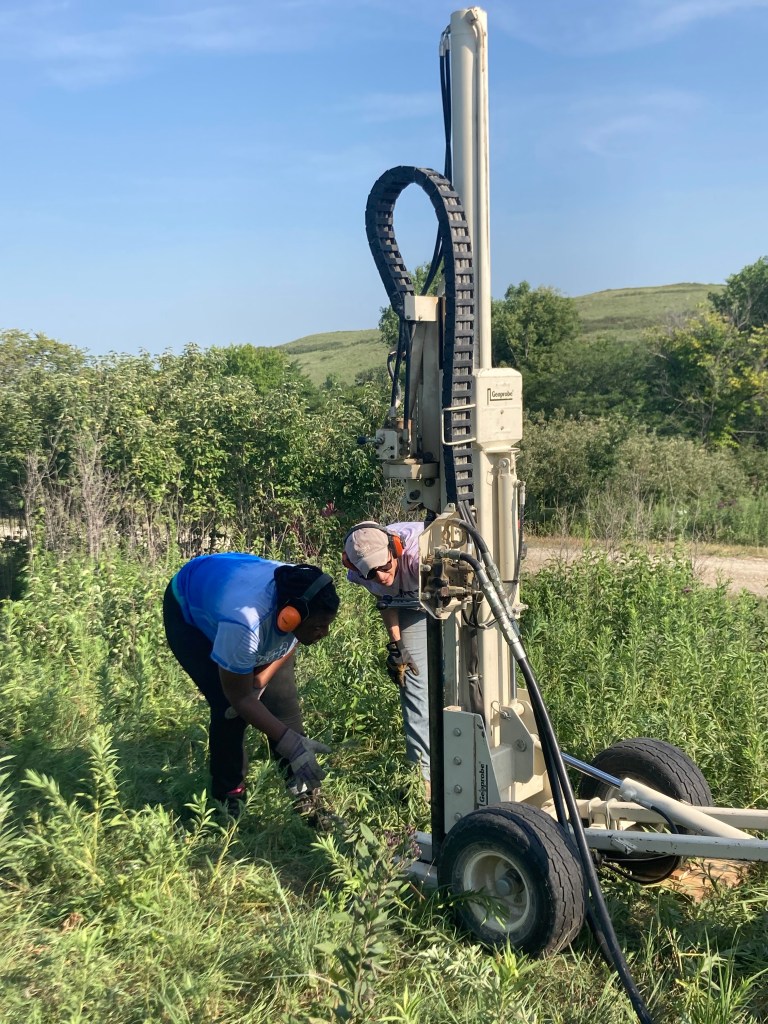
In the summer of 2021, Faith examined the magnitude that woody encroachment altered tall grass prairie subsurface hydrologic capabilities such as: infiltration, hydraulic conductivity, and water storage through field experimentation, ArcGIS Hydrology Toolset, and infiltration models.
Atmospheric and Aerosol Measurement Laboratory
During 2020, Kimberly worked to generate samples for analysis in the WT-CRAFT via electrolysis and UV exposure. She evaluated the ice nucleating capabilities of samples with hydrogen peroxide to provide the first test method for achieving Classical Nucleation Theory.
In 2021, she analyzed aerosol samples utilizing various instruments: CPC, APS, UV Spec, and a SEM-EDX.
She further hypothesized and tested the applicability of the Classical Nucleation Theory on amino acids, precipitation, and soil samples.
In Situ Thermal Remediation Treatment Development
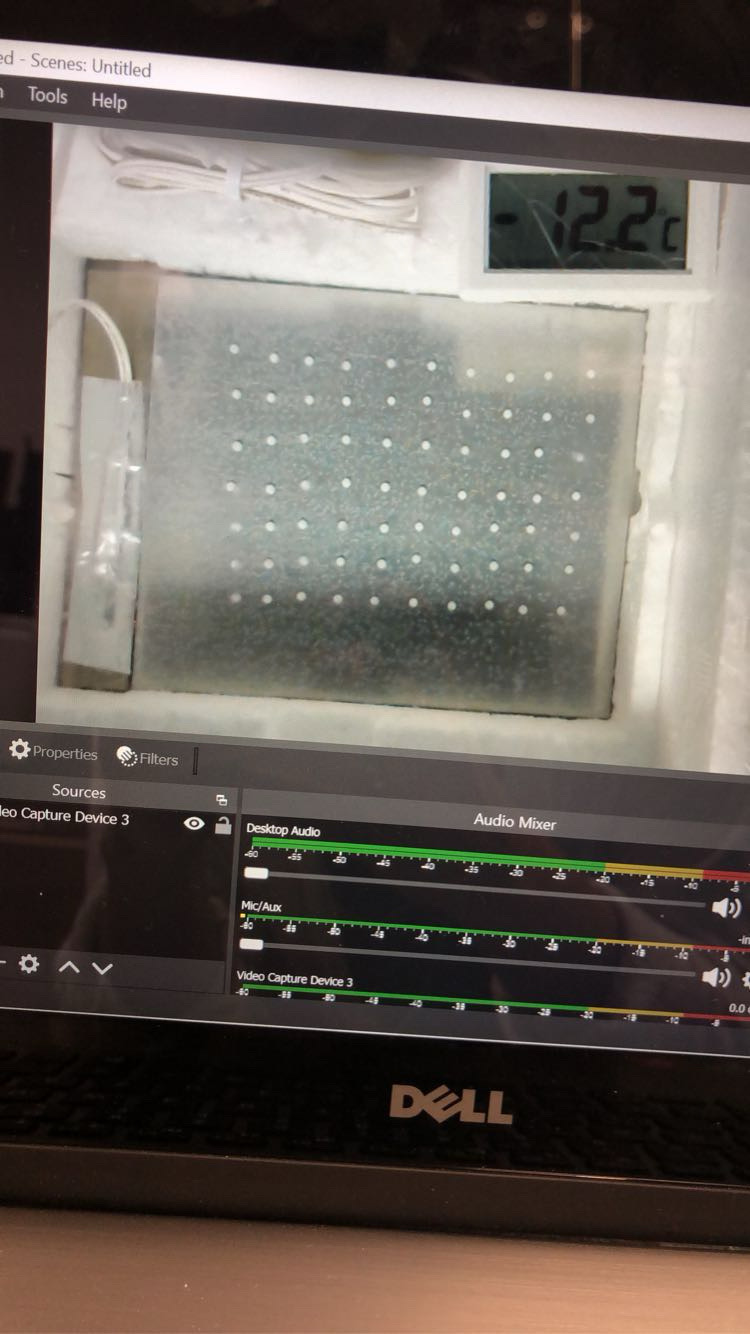
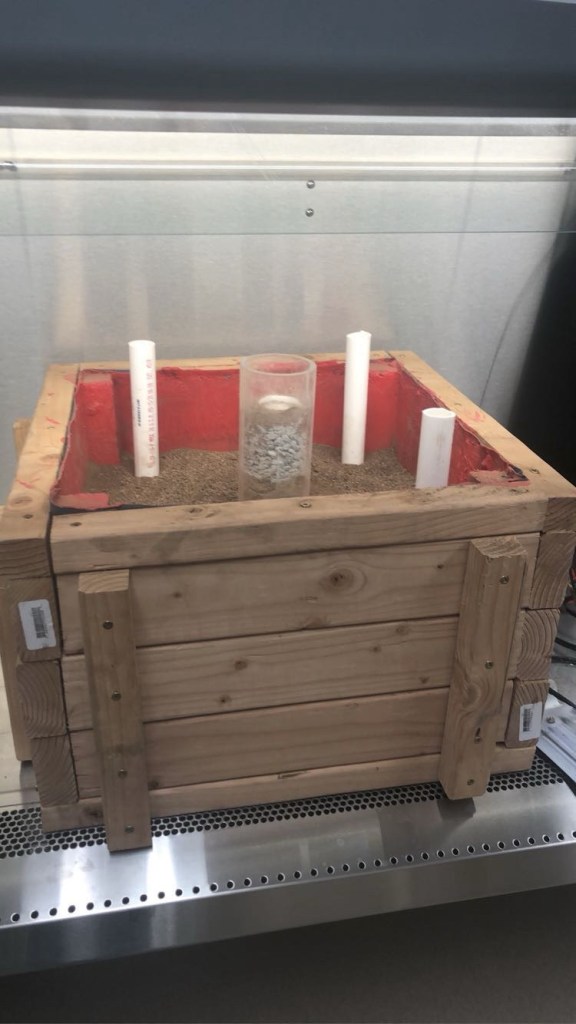
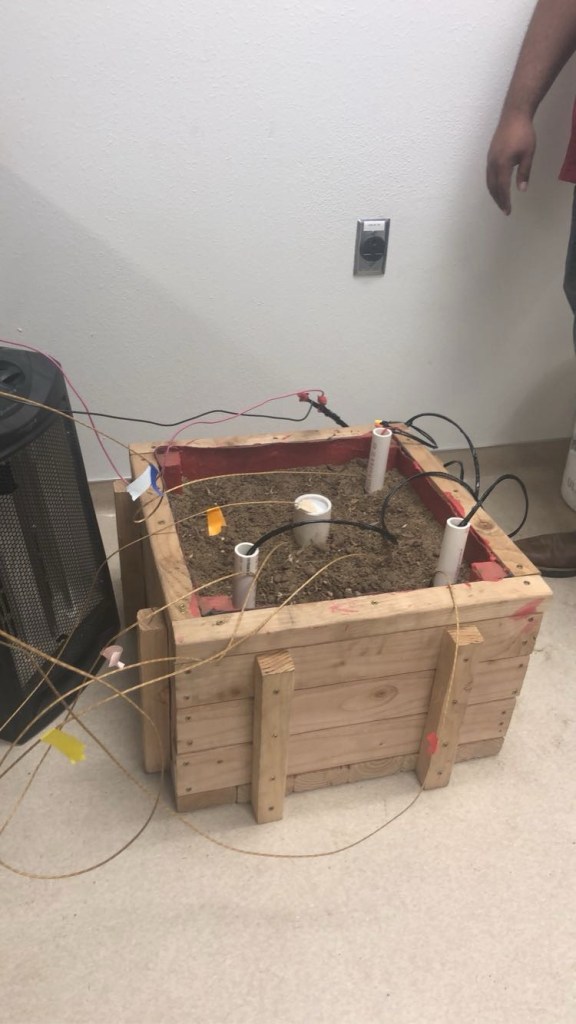
In the fall of 2020, Faith and Kimberly worked alongside a group of undergraduate seniors to remediate an oil spill on a local farmer’s land. The oil was composed of benzene, toluene, ethylbenzene, and xylene (BTEX) among other compounds. Through extensive thermodynamic and heat transfer research, a three pronged heating system was developed. Lab experiments, depicted below, were conducted to provide proof of concept alongside ANSYS modeling and calculations proving scalability of the system. This research project was the first of its kind at West Texas A&M University, utilizing electrolysis, thermodynamics, and heat transfer to remediate a water well oil spill.
TRACER-MAP & AQ2
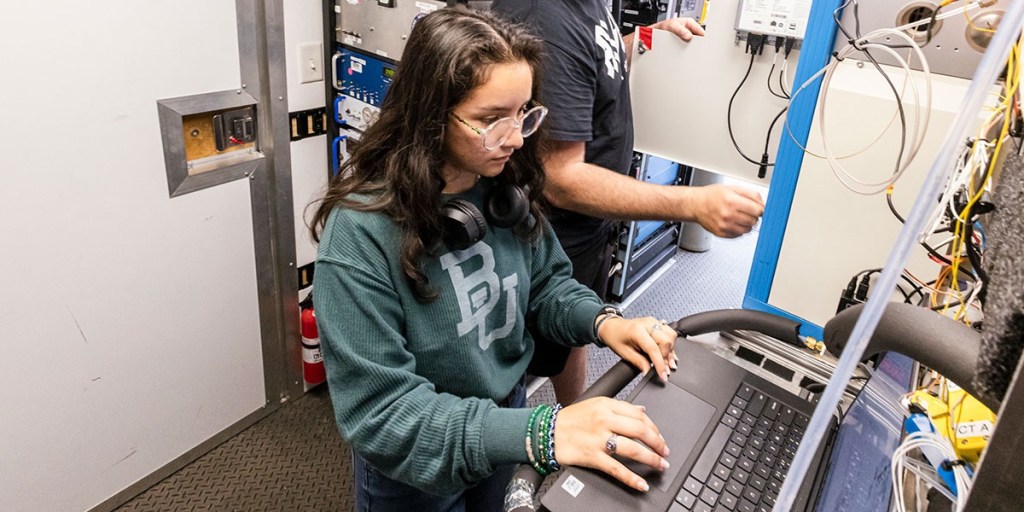
During the summer of 2022, Kimberly participated in two research campaigns over the entirety of the Houston, Tx metroplex. The TRacking Aerosol and Convection interactions ExpeRiment (TRACER) – Mapping Aerosol Processes (MAP), and TRACER – Air Quality 2 aimed at better understanding convection events in the Houston metroplex and how they are related to localized and long range pollution sources. Over the course of three months, Kimberly worked alongside students and professionals to collect, verify, and analyze pollutant data. By utilizing a Proton Transfer Reaction – Mass Spectrometer (PTR-MS), Kimberly collected three months of 30 second data on VOCs including:
- Benzene
- Toluene
- Ethylene
- Xylene
- Isoprene
- 1,3 Butadiene
- Acetaldehyde
- Acetone
- Methacrolein
- Methyl Vinyl Ketone
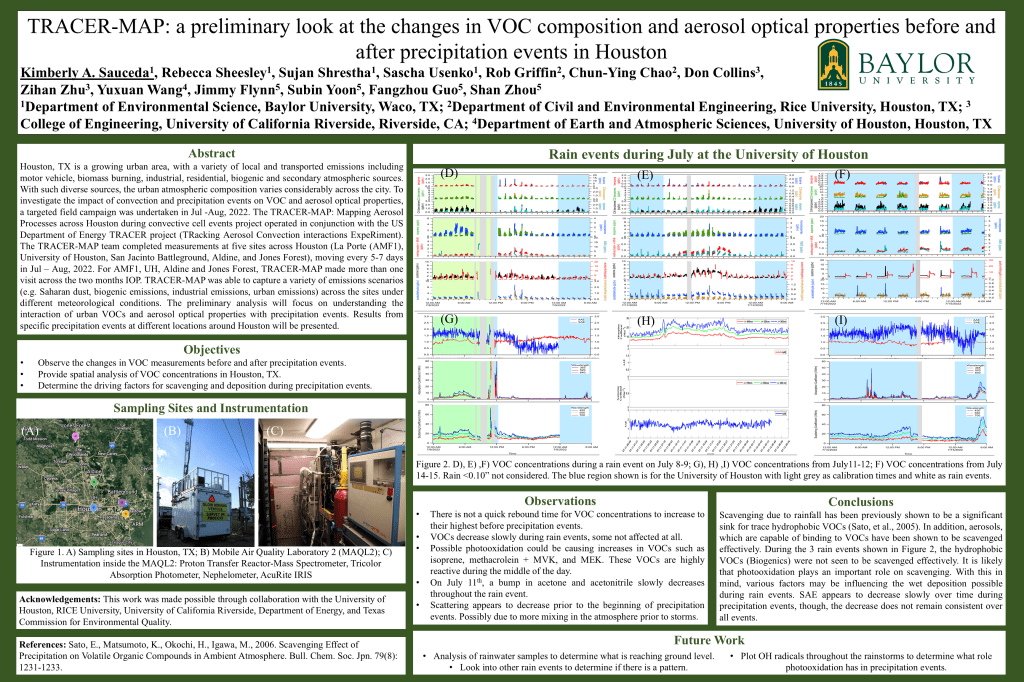
Alongside these VOC measurements, particulate matter concentrations were measured utilizing a Tricolor Absorption Photometer (TAP). Coupled with measurements from other universities, Kimberly presented her findings at the American Meteorological Society where she received a 2nd place award for her presentation and research. Her research findings can be seen below:
For more information on this research, follow the links below.
https://www-air.larc.nasa.gov/missions/tracer-aq/
https://www.arm.gov/research/campaigns/amf2022tracer-map
https://ams.confex.com/ams/103ANNUAL/meetingapp.cgi/Paper/422124
Elevated Nighttime Isoprene Concentrations in the Houston Shipping Channel
In the spring of 2024, Kimberly presented her Master’s thesis titled “Elevated nighttime isoprene concentrations in the Houston shipping channel : short-range transport dynamics of localized industrial emissions.” This research was the result of the first TRACER campaign named TRACER – Air Quality 1. The TRACER-AQ1 campaign set a precedent for researching the Houston shipping channel more extensively in the following TRACER-MAP and TRACER-AQ2 campaigns.
During the TRACER-AQ1 campaign, which took place in the late summer of 2021, a series of high isoprene events were identified. Isoprene, a non-regulated VOC, poses a threat on its own for carcinogenicity, and can react chemically in the atmosphere to form carcinogens. This research was the culmination of many students efforts in data collection, often resulting in long hours. Kimberly identified multiple isoprene “events” using a threshold for background concentrations and average monthly concentrations. This threshold created a precedent to look at isoprene, which showed levels above 100 parts per billion.
Upon determining events of importance over the campaign, one event was chosen for modeling and further analysis. The National Oceanic and Atmospheric Administration (NOAA) Real-time Environmental Applications and Display sYstem (READY) Hybrid Single-Particle Lagrangian Integrated Trajectory (HYSPLIT) dispersion model was utilized to project back trajectories of the isoprene event. This modeling effort resulted in the following plot:
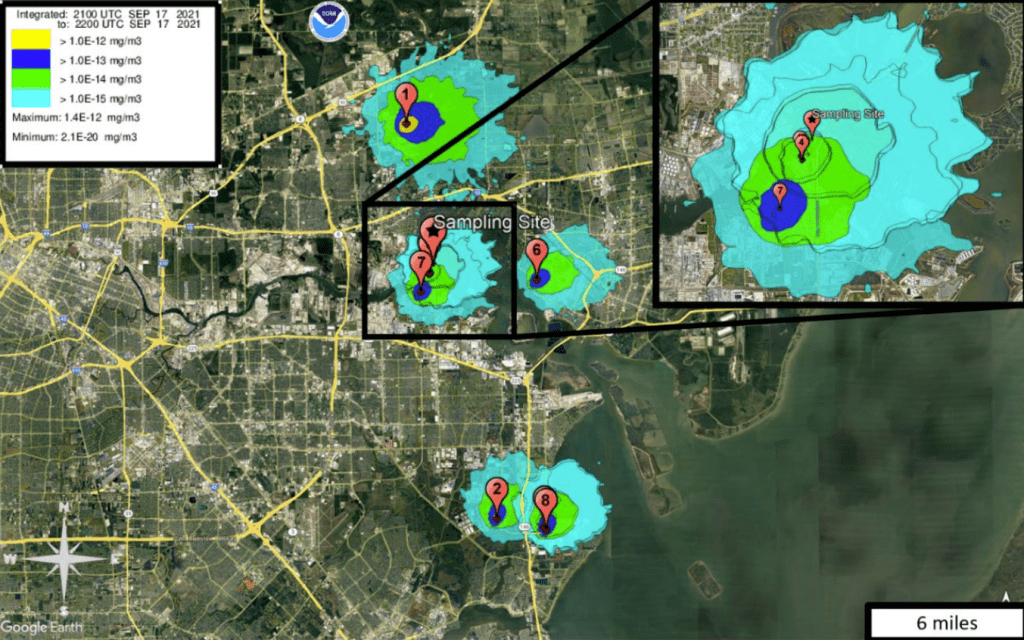
Being an unregulated VOC, the results were presented to the funding agency, the Texas Commission on Environmental Quality. To read the full thesis, follow this link:
https://baylor-ir.tdl.org/items/59f34d95-41e2-45de-8e81-660602554e58
 Sauson Environmental Solutions